
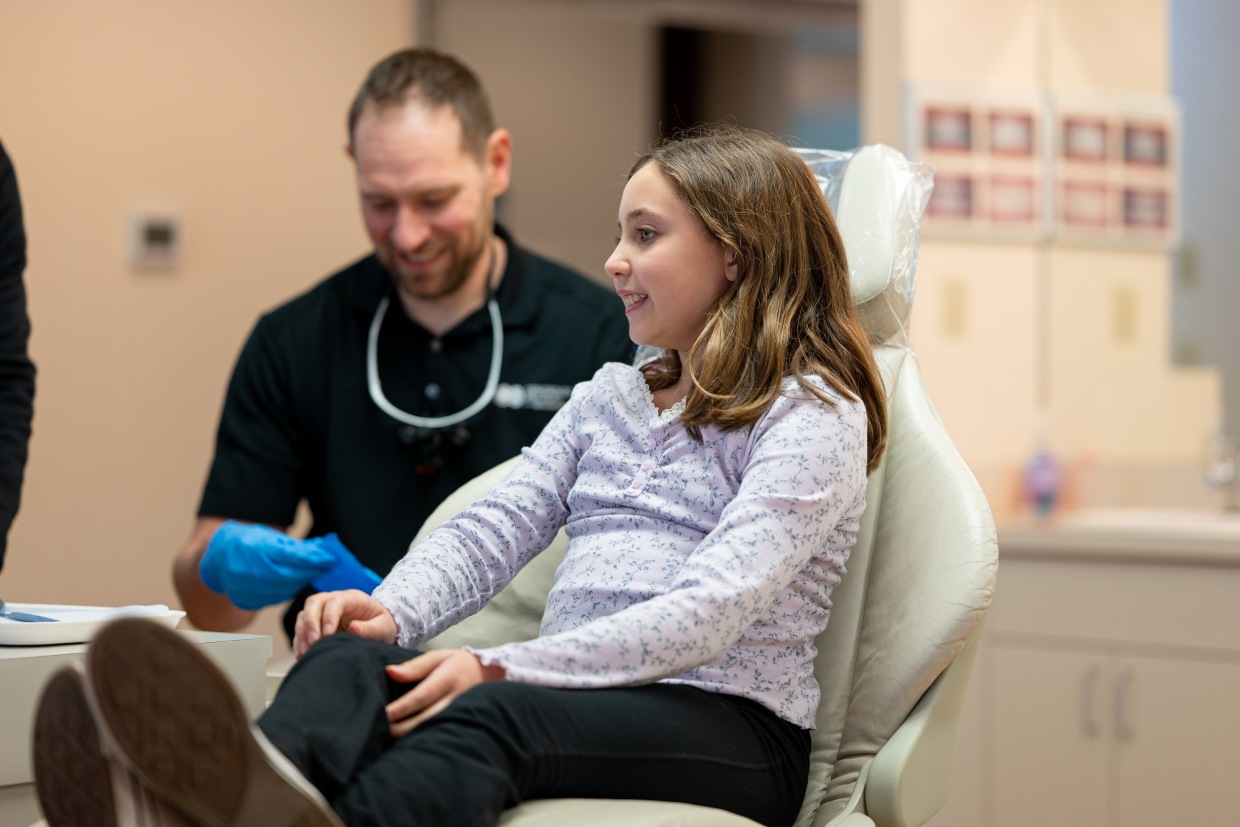
Wondering what age kids should get braces? Children should first see an orthodontist by age 7, according to the American Association of Orthodontists . At this age, enough permanent teeth have emerged to spot developing issues like crossbites, crowding, or jaw growth concerns. Most kids actually get braces between ages 9 and 14, after the majority of permanent teeth erupt. Early evaluation doesn't always mean early treatment. It simply gives the orthodontist a chance to monitor growth and recommend the best timing for your child's smile.
The ideal age for braces depends on your child's dental development, not just their birthday. Some kids benefit from early intervention around age 7 or 8, while others do best waiting until age 11 or 12. A board-certified orthodontist evaluates each child individually to determine when treatment will be most effective, and families in Souderton often start with a simple check-in visit before any decisions are made.
How Orthodontic Treatment Timing Works for Kids
Orthodontic treatment for kids works in phases timed to jaw growth and tooth eruption. A board-certified orthodontist looks at how baby teeth are falling out, how permanent teeth are coming in, and how the upper and lower jaws are developing. Based on those signals, treatment falls into one of three categories, each shaped around your child's specific developmental stage.
Phase 1 (Interceptive Treatment): Early treatment happens between ages 6 and 10, while your child's jaw is still growing. It addresses specific issues like crossbites, severe crowding, or protruding front teeth. The goal is to guide jaw development and create space for permanent teeth. Not every child needs Phase 1. It's reserved for cases where waiting could lead to more complex issues.
Phase 2 (Full Treatment): Most kids start here, between ages 11 and 14 after most permanent teeth have erupted. The aim is to align the full set of teeth and fine-tune the bite for long-term function and appearance.
Single-Phase Treatment: Many kids only need one round of treatment, starting when they have most of their permanent teeth. One stretch of care handles everything at once.
During your child's evaluation, the orthodontist assesses:
- Jaw growth patterns and facial development
- Tooth eruption sequence and timing
- Bite alignment and how upper and lower teeth meet
- Available space for incoming permanent teeth
Starting treatment at the right time can reduce overall time in braces and produce better results, which is why families in Quakertown and surrounding areas often book that age-7 check-in even when nothing looks obviously off.
What Age Do Most Kids Get Braces?
Timing matters when it comes to orthodontic treatment. Here's why starting at the optimal age makes a real difference for young smiles:
Why Is Tooth Movement Easier in Children?
Kids' jaw bones are still developing, which makes teeth easier to shift into proper position. The same movement that takes longer in an adult mouth can happen more smoothly during the growth years, and that often translates into shorter treatment overall. Early treatment can also influence how the jaw develops, potentially avoiding more involved procedures later in life.
How Does Treatment Build Confidence in Kids?
A straighter smile during middle school and high school supports your child's self-esteem during some seriously formative years. Proper bite alignment also helps with chewing, speaking clearly, and even breathing, so the benefits show up well beyond the mirror. Correcting alignment early reduces the risk of uneven tooth wear, gum disease, and TMJ discomfort down the road.
Other perks of starting at the right age include:
- Guides jaw growth: Early care can shape how the jaw develops over time
- Improves daily function: Proper bite alignment helps with chewing, speaking, and breathing
- Prevents future issues: Catching alignment problems now heads off bigger ones later
- Often shorter treatment time: Ideal-stage starts frequently take less time overall
Braces vs. Clear Aligners for Kids: Which Is Better?
Both braces and clear aligners can create beautiful smiles for kids. The right choice depends on your child's specific needs and maturity level.
| Feature | Traditional Metal Braces | Clear Aligners | Ceramic Braces |
|---|---|---|---|
| Visibility | Most noticeable | Nearly invisible | Tooth-colored, subtle |
| Removable | No | Yes | No |
| Best for | Complex cases, younger kids | Mild to moderate cases, responsible teens | Moderate cases, image-conscious kids |
| Compliance needed | None, always working | High, requires 20-22 hours daily wear | None, always working |
| Food restrictions | Yes | No (removed when eating) | Yes |
Are Traditional Metal Braces Right for Your Child?
Traditional metal braces remain the most versatile option. They handle complex bite issues effectively and work around the clock without relying on your child to remember to wear them. For younger kids in the OS fam who are still building habits, that always-on factor can be a real win.
When Do Clear Aligners Work Best for Kids?
Clear aligners offer a discreet alternative for mild to moderate cases. They work best for responsible kids who can commit to wearing them consistently, usually 20 to 22 hours a day. If your child tends to lose things or forget instructions, braces might be the better pick.
Should You Consider Ceramic Braces?
Ceramic braces provide a middle ground: the reliability of fixed braces with tooth-colored brackets that blend in more naturally. Many image-conscious tweens and teens in the Doylestown area land on ceramic as the sweet spot between traditional metal and clear aligners.
What Affects the Cost of Kids' Braces?
The three biggest factors driving the cost of kids' braces are the type of appliance, the complexity of the case, and whether one or two phases of treatment are needed. Typical fees vary by region and insurance coverage . Here's a closer look at what shapes the final number for your family:
- Type of braces: Metal braces typically cost less than ceramic braces or clear aligners
- Treatment complexity: More severe alignment or bite issues require longer treatment and may cost more
- Treatment phases: Two-phase treatment (Phase 1 plus Phase 2) involves separate treatment periods and generally costs more than single-phase care
- Geographic location: Costs vary by region and practice
- Insurance coverage: Many dental insurance plans cover a portion of orthodontic treatment for kids under 18
Most orthodontic practices offer flexible financing with low monthly payments to make treatment accessible. Every family deserves a confident smile, regardless of budget, and a complimentary consult is the easiest way to get a clear breakdown of costs and discuss payment options that work for your household.
Signs Your Child May Need Braces
The most common signs a child may need braces fall into four buckets: tooth alignment issues, bite problems, developmental concerns, and functional difficulties like chewing or speech. Wondering if your child should see an orthodontist? Watch for these common indicators:
Tooth alignment issues:
- Crowded, crooked, or overlapping teeth
- Gaps between teeth
- Teeth that don't meet properly when biting down
Bite issues:
- Overbite (upper teeth extend too far over lower teeth)
- Underbite (lower teeth sit in front of upper teeth)
- Crossbite (some upper teeth sit inside lower teeth)
- Open bite (front teeth don't touch when back teeth are closed)
Developmental concerns:
- Baby teeth lost very early or very late
- Permanent teeth coming in crooked or in wrong positions
- Jaw that shifts or makes clicking sounds
Functional signs:
- Difficulty chewing or biting food
- Speech difficulties
- Mouth breathing
- Thumb sucking continuing past age 5
If you notice any of these signs, scheduling an evaluation makes sense. Many issues are easier to address when caught early, and families across the Souderton, Quakertown, and Doylestown communities often find that an early visit saves time and stress later.
Frequently Asked Questions About Kids and Braces
Can a child be too young for braces?
Yes, very young kids typically aren't ready for braces. Most need to wait until they have enough permanent teeth, usually around age 9 or older. However, the American Association of Orthodontists recommends an initial evaluation by age 7 so a board-certified orthodontist can monitor development and identify the best time to start.
How long do kids typically wear braces?
Treatment length varies based on the complexity of your child's case. Most kids wear braces for 12 to 24 months . Some simpler cases finish sooner, while more complex bite issues may take longer. Your orthodontist will give you a more specific estimate after examining your child.
Are braces uncomfortable for children?
Braces cause some discomfort, especially during the first few days and after adjustments. Most kids describe it as pressure more than anything else. Over-the-counter relief, soft foods, and orthodontic wax for any irritation help manage discomfort. Most kids adjust quickly.
Do all baby teeth need to fall out before getting braces?
Not necessarily. Some kids start treatment while they still have a few baby teeth, especially if they're receiving Phase 1 care. For full treatment, orthodontists typically wait until most permanent teeth have erupted, usually around age 11 or 12.
Will my child need braces again if they had early treatment?
Phase 1 treatment addresses specific developmental issues but doesn't always eliminate the need for Phase 2 later. However, early intervention often makes the second phase shorter and simpler. Your orthodontist, ideally a board-certified specialist focusing on orthodontics, will discuss the likelihood of needing additional treatment.
How do kids care for braces at home?
Good oral hygiene becomes even more important with braces. Kids should:
- Brush after every meal using a soft-bristled toothbrush
- Floss daily using a floss threader or orthodontic flossers
- Avoid hard, sticky, or chewy foods that can damage brackets
- Wear a mouthguard during sports
- Attend all scheduled adjustment visits
Curious whether your child is ready for braces? The best next step is a complimentary consult with a board-certified orthodontist who can review your child's growth, answer your questions, and help you understand the timing options. Schedule your complimentary consult today and welcome your kiddo into the OS fam.