
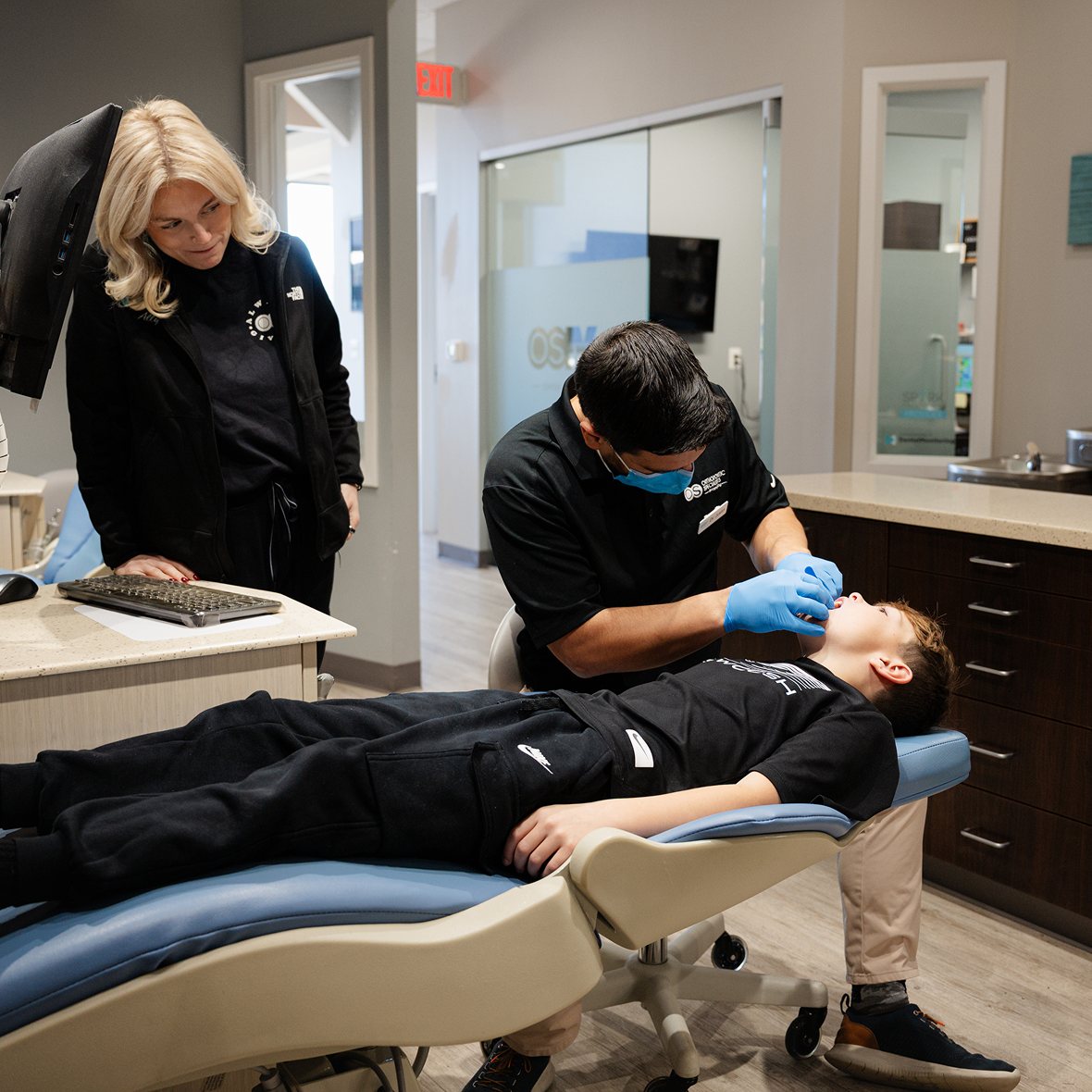
Do braces hurt? They cause mild to moderate soreness, not sharp pain. The placement visit itself is painless. Discomfort typically begins 4-6 hours after your brackets and wires are placed, peaking around days 2-3. Most people describe the sensation as pressure or tenderness rather than actual pain. This discomfort is temporary and predictable, with the majority of wearers fully adapting within two weeks of getting braces.
If you're feeling nervous about starting orthodontic treatment, you're not alone. It's one of the most common concerns we hear at Orthodontic Specialists. The good news? Modern braces are more comfortable than ever, and knowing what to expect makes the experience much easier to manage.
A Braces Discomfort Timeline: What to Expect Day by Day
Understanding when discomfort happens helps you prepare for what's coming. Here's what most people experience:
Day 1: Placement Day Getting your braces put on doesn't hurt. Your orthodontist bonds brackets to your teeth and threads the archwire through them. You might feel some pressure, but there's no pain during the visit itself. Soreness typically starts 4-6 hours later as your teeth begin responding to the gentle forces.
Days 2-3: Peak Tenderness This is when soreness is at its strongest. Your teeth may feel sore when you bite down, and your cheeks and lips are still getting used to the brackets. Stick to soft foods and use the relief strategies we'll cover below.
Days 4-7: Turning the Corner The soreness starts fading noticeably. Your mouth is adapting to the brackets, and eating becomes easier. Many wearers say they forget their braces are there by the end of the first week.
Week 2 and Beyond By now, most people feel completely normal. Your cheeks and lips have toughened up, and the initial pressure has subsided.
Monthly Adjustment Visits After each tightening, expect 1-3 days of mild soreness. These adjustments tend to cause less discomfort than the initial placement.
Braces Removal Day Good news here. Getting your braces off is quick and painless. You'll feel some pressure as brackets are removed, but no pain.
Why Braces Cause Discomfort (And Why It's a Good Sign)
Braces cause discomfort because your teeth are physically shifting position, and that movement triggers a natural biological response. The archwire applies steady, gentle force to each bracket, which signals your body to remodel the bone surrounding your tooth roots. This remodeling process is what allows teeth to move into better alignment, and the mild soreness you feel is simply a sign that the process is working as intended.
That soreness you feel? It actually means your treatment is working. Here's what's happening beneath the surface:
- Your teeth are responding to pressure. When the archwire applies gentle force, your teeth begin shifting into better positions over the course of days and weeks.
- Bone remodeling is occurring. The pressure stimulates specialized cells called osteoclasts to break down bone on one side of the tooth root, while osteoblasts rebuild bone on the other side. This continuous cycle is what allows teeth to move safely.
- Today's wires are gentler. Heat-activated nickel-titanium archwires warm to body temperature and apply lighter, more consistent pressure than older stainless-steel wires. Smaller, smoother brackets also reduce friction and soft-tissue irritation.
- Your body adapts quickly. The initial discomfort decreases with each adjustment as your mouth becomes accustomed to the brackets, wires, and the sensation of tooth movement.
Think of it like starting a new workout routine. Some muscle soreness is normal and expected. It's a sign that change is happening, and just like with exercise, the discomfort fades as your body adjusts. At Orthodontic Specialists, we use lighter-force wire systems specifically designed to keep that adjustment period as comfortable as possible for every member of the OS fam.
Do Braces Hurt More Than Clear Aligners?
| Factor | Traditional Braces | Clear Aligners |
|---|---|---|
| Initial Discomfort | Moderate soreness for 3-7 days | Mild pressure for 2-3 days |
| Frequency of Discomfort | Monthly (after adjustments) | Every 1-2 weeks (new trays) |
| Soft Tissue Irritation | Brackets may rub cheeks/lips | No brackets to cause irritation |
| Type of Force | Continuous pressure | Staged, incremental pressure |
| Overall Discomfort Level | Comparable | Comparable (more frequent but milder) |
Both options cause similar overall discomfort levels, just distributed differently. Traditional braces deliver continuous force with soreness concentrated around monthly adjustment visits, meaning you experience a few stronger waves of tenderness spread across treatment. Clear aligners cause mild pressure more often since you switch to a new tray every one to two weeks, which means the discomfort is more frequent but typically gentler each time.
Aligners do avoid the soft-tissue irritation that brackets and wires can sometimes cause along the inside of the cheeks and lips. On the other hand, braces don't require the same level of daily discipline since they're always working, while aligners only deliver results when worn 22 hours a day. Some patients in our Souderton, Quakertown, and Doylestown practices prefer the predictability of braces, while others appreciate the lower-profile feel of aligners.
Your orthodontist can help you decide which option fits your lifestyle and treatment needs during a complimentary consult.
How to Manage and Relieve Braces Soreness
To relieve braces soreness, try these six proven methods: over-the-counter pain relievers, cold foods and drinks, orthodontic wax, a soft food diet, salt water rinses, and avoiding problem foods. Here's how each one works.
Over-the-counter relievers like ibuprofen or acetaminophen work well for the first 2-3 days after placement or adjustments. Take them as directed on the package, and consider taking a dose before your visit to stay ahead of discomfort.
Cold Foods and Drinks Cold temperatures naturally numb soreness. Try:
- Smoothies
- Yogurt
- Ice water
- Frozen fruit
- Popsicles
Orthodontic Wax This soft wax creates a barrier between your brackets and the inside of your cheeks and lips. Apply a small piece over any bracket that's causing irritation. Your orthodontist will give you wax at your visit.
Soft Food Diet For the first few days, stick to foods that don't require much chewing:
- Mashed potatoes
- Scrambled eggs
- Pasta
- Soup
- Soft fruits like bananas
- Oatmeal
Salt Water Rinses Dissolve half a teaspoon of salt in warm water and swish gently. This soothes inflamed gums and helps any minor irritation heal faster.
Foods to Avoid Hard, sticky, and crunchy foods make soreness worse and can damage your braces. Skip popcorn, nuts, hard candy, and chewy caramels, especially during the adjustment period. If you live near our Bucks County practices, our team can walk you through a personalized food list at your next visit.
Who Tolerates Braces Best? What to Expect by Age
Kids (Ages 7-11) Children in early interceptive treatment often adapt the quickest. Their bones are still developing, which can make tooth movement feel easier. Kids also tend to bounce back from discomfort faster than adults. We see this regularly at our Souderton and Doylestown locations.
Teens This is the most common age for braces, and teens typically manage soreness well. According to the American Association of Orthodontists , adolescence is often an ideal time for treatment because permanent teeth have erupted but jaw growth is still occurring.
Adults Adult patients may experience slightly more discomfort because their bone is denser than a child's or teen's. But this varies widely from person to person. Many adults treated at our Quakertown practice report that the discomfort was much less than they expected.
The Bottom Line Tolerance is highly individual. Some people barely notice their braces after the first day, while others need a full week to adjust. Age plays a role, but your personal experience will depend on many factors, including your pain threshold, the complexity of your case, and how closely you follow your orthodontist's care instructions.
Frequently Asked Questions About Braces Discomfort
How long are braces sore after they're put on?
Soreness typically lasts 3-7 days after initial placement. The discomfort peaks around days 2-3 and then gradually fades. By the end of the first week, the majority of wearers feel much more comfortable.
Does tightening hurt as much as getting braces put on?
Usually less. Your mouth has already adapted to the brackets, so you're only dealing with the new pressure from the adjusted wire. Expect 1-3 days of mild tenderness after each adjustment visit.
Are braces more uncomfortable at night?
Many people notice their braces more at night. During the day, you're distracted by activities, conversations, and meals. At night, with fewer distractions, you may be more aware of the pressure. This is normal and doesn't mean anything is wrong.
Can braces discomfort ever be unbearable?
Severe discomfort is rare with braces. If you're experiencing intense soreness that doesn't respond to over-the-counter relievers, or if a wire is poking your cheek, contact your orthodontist. A quick adjustment can usually solve the issue. The team at Orthodontic Specialists is happy to fit you in for a comfort check whenever you need one.
Do braces hurt when they come off?
No. Removal day is painless. Your orthodontist uses a special tool to gently pop the brackets off, and any remaining adhesive is polished away. You'll feel some pressure but no pain. Many wearers say it's actually a relief.
Why do my braces feel sore randomly months into treatment?
Random soreness can happen if a wire shifts slightly, if food gets stuck and puts pressure on a bracket, or after your teeth have moved into a new position. It's usually temporary. If the discomfort persists or a wire is poking you, give your orthodontist a call.