
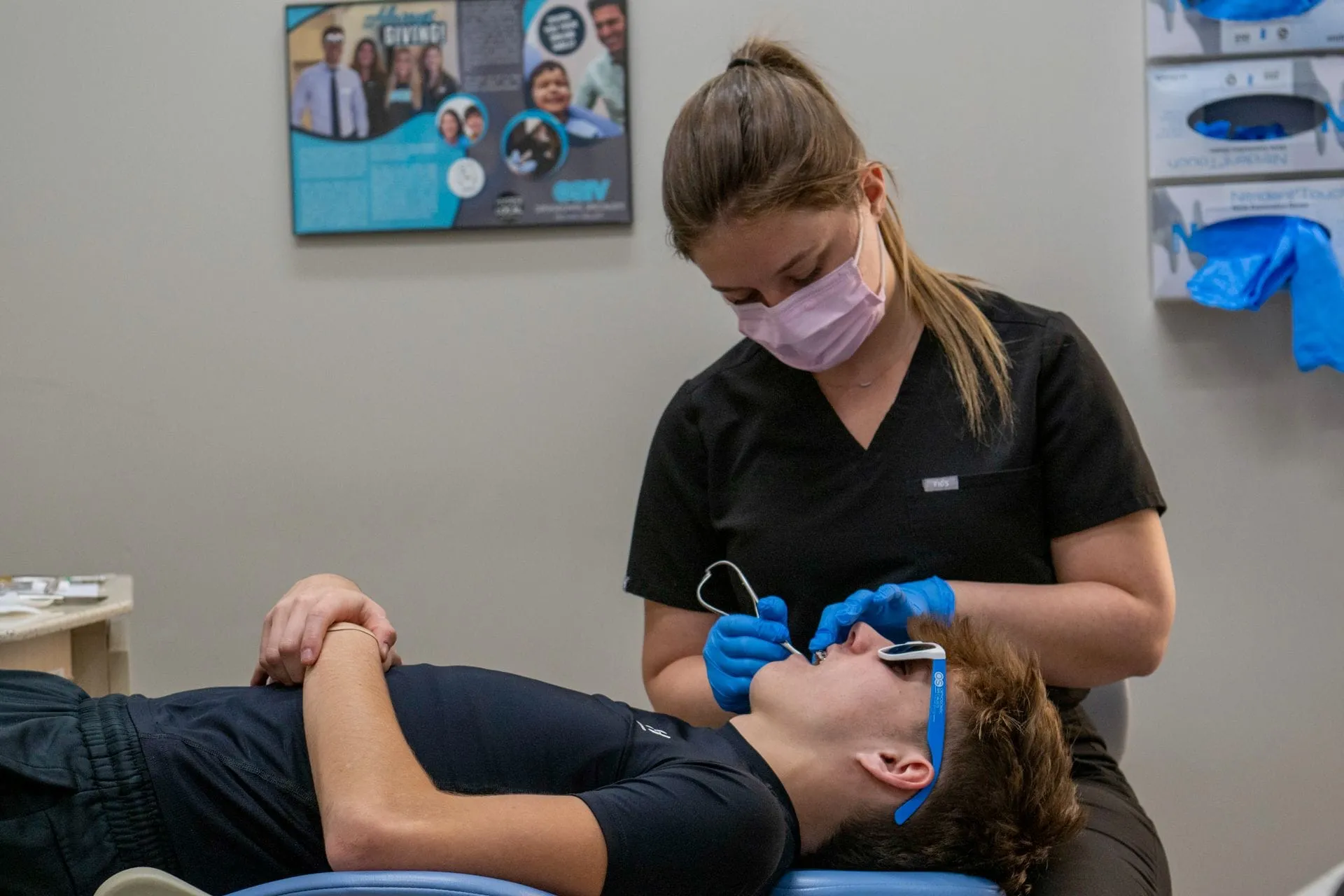
When your bite doesn't line up properly, an orthodontist can identify the specific type of misalignment and create a treatment plan to correct it. Overbites, underbites, and crossbites are all forms of malocclusion, a term that simply means your teeth don't meet the way they should. Correcting bite misalignment starts with knowing what each condition looks like and why it matters for your oral health.
What Are Overbites, Underbites, and Crossbites?
These three conditions are the most common bite misalignments. An overbite means upper front teeth overlap the lower ones too far. An underbite is the reverse, with lower teeth sitting in front of the uppers. A crossbite happens when some upper teeth fit inside the lower teeth instead of outside. Each affects how you chew, speak, and smile.
An overbite occurs when your upper front teeth overlap your lower teeth vertically beyond the normal range. A small amount of overlap is typical, but when the overlap becomes excessive, it can cause issues with wear and function.
An underbite is the opposite situation. Your lower teeth sit in front of your upper teeth when you bite down. This often gives the lower jaw a more prominent appearance.
A crossbite happens when some of your upper teeth fit inside your lower teeth rather than outside them. This can occur on one side of your mouth or both, and it can affect front teeth (anterior crossbite) or back teeth (posterior crossbite).
All three conditions develop for similar reasons. Genetics play a major role. If your parents had bite issues, you're more likely to have them too. Childhood habits like thumb-sucking or tongue thrusting can also contribute. Sometimes the upper and lower jaws simply grow at different rates, creating a mismatch in how teeth come together.
Left untreated, these bite issues can lead to uneven tooth wear, difficulty chewing, and jaw discomfort over time.
How Orthodontists Diagnose and Treat Bite Problems
Orthodontists diagnose bite issues through hands-on clinical exams, 3D digital scans, X-rays, and cephalometric imaging. Once they pinpoint whether the issue is dental or skeletal, treatment may involve braces, clear aligners, palatal expanders, elastics, headgear, or in severe cases, jaw repositioning. The right approach depends on age, severity, and growth stage.
Diagnosis begins with a thorough clinical exam. Your orthodontist will look at how your teeth come together, assess your jaw movement, and check for signs of wear or strain. Digital scans capture detailed 3D images of your teeth, while X-rays and cephalometric imaging reveal the underlying bone structure and jaw position.
This information helps determine whether your bite issue is dental (involving tooth position) or skeletal (involving jaw size or position). The distinction matters because it affects which treatments will work best.
What Treatment Options Are Available?
Traditional braces remain one of the most effective tools for bite correction. Brackets and wires apply steady pressure to move teeth into proper alignment. For bite issues specifically, orthodontists often add elastics (rubber bands) that connect upper and lower braces to shift jaw position.
Clear aligners can correct many bite issues, though they work best for mild to moderate cases. Aligners with attachments and precision cuts can address overbites and some crossbites effectively.
Palatal expanders widen a narrow upper jaw, which is particularly helpful for crossbites in growing children. The appliance gradually separates the bones of the palate, creating more space for teeth to align properly.
Headgear applies external force to guide jaw growth in younger patients. While less common today, it remains valuable for certain skeletal cases.
For severe skeletal discrepancies, especially significant underbites, orthognathic correction may be recommended. This involves repositioning the jaw bones to achieve proper alignment, typically combined with braces before and after.
Treatment timelines vary widely. Simple cases might take six months, while complex bite corrections can require two years or more.
Benefits of Correcting Bite Misalignment
Fixing a bite issue does more than improve your appearance. Proper alignment supports better function, comfort, and confidence for years to come. Here's a closer look at what bite correction can do for you.
How Does Bite Correction Protect Your Oral Health?
-
Protects your teeth from damage. Misaligned bites cause uneven wear. Some teeth take more force than they should, leading to chips, cracks, and enamel erosion.
-
Makes eating easier. When your teeth meet correctly, you can chew food more efficiently. This actually helps with digestion too.
-
Relieves jaw discomfort. Bite issues often contribute to TMJ discomfort, headaches, and muscle tension. Correcting the alignment can ease these symptoms.
-
Supports long-term oral health. Properly aligned teeth are easier to clean, which lowers your risk of cavities and gum disease.
What Are the Lifestyle and Confidence Benefits?
-
Improves speech clarity. Certain bite issues affect how you pronounce words. Treatment can help with lisps and other speech patterns related to tooth position.
-
Boosts your confidence. A balanced bite often means a more symmetrical smile. Many people feel more comfortable smiling after treatment.
According to the American Association of Orthodontists, correcting bite issues during childhood or adolescence can prevent more serious dental issues later in life.
Overbite vs. Underbite vs. Crossbite: Key Differences
| Feature | Overbite | Underbite | Crossbite |
|---|---|---|---|
| Direction | Vertical (upper teeth overlap lower) | Horizontal (lower teeth in front of upper) | Lateral (upper teeth inside lower) |
| Prevalence | Most common malocclusion | Less common | Moderately common |
| Primary Cause | Often dental; sometimes skeletal | Usually skeletal | Can be dental or skeletal |
| Typical Treatment | Braces, aligners, elastics | Braces, expanders, sometimes jaw repositioning | Expanders, braces, aligners |
| Severity Range | Mild to severe | Mild to severe | Anterior or posterior |
How Is Severity Classified?
Orthodontists classify each type as mild, moderate, or severe. Mild cases often respond well to braces or aligners alone. Moderate cases may need additional appliances like expanders or elastics. Severe cases, particularly skeletal underbites, sometimes require jaw repositioning for the best results.
The good news? Most bite issues fall into the mild to moderate range and can be corrected with non-invasive approaches.
What Affects the Cost of Bite Correction
Several factors influence what you'll pay for treatment:
Complexity of your case. A mild overbite corrected with aligners costs less than a severe underbite requiring braces, expanders, and additional procedures.
Treatment method. Traditional braces, clear aligners, and advanced options each have different price points. Your orthodontist will recommend what works best for your specific situation.
Treatment duration. Longer treatment means more visits and adjustments, which affects overall cost.
Additional appliances. Expanders, headgear, and elastics add to the total investment.
Your location. Treatment costs vary by region and practice, with rates in areas like Bucks County reflecting local market trends.
Many orthodontic practices offer flexible financing and low monthly payment options to make bite correction accessible for the whole OS fam. Many dental insurance plans cover a portion of orthodontic treatment, especially for kids and teens. A complimentary consult is often the best way to understand your coverage and total cost.
Who Is a Candidate for Bite Correction?
Should Children Be Evaluated Early?
The American Association of Orthodontists recommends that children have their first orthodontic evaluation by age 7. At this age, an orthodontist can spot developing bite issues and decide whether early intervention would help. For crossbites especially, treating during childhood, while the jaw is still growing, often produces better results with simpler care. This is why so many Bucks County families bring their kids in early as part of the OS fam.
Why Are the Teen Years Ideal?
The teen years are often an ideal window for bite correction. Most permanent teeth have come in, but the jaw is still developing. This makes it easier to guide teeth and bone into proper position. Many teens choose clear aligners for a more discreet option.
Can Adults Still Get Treatment?
It's never too late to fix a bite issue. Adult treatment takes a bit longer since the bones are no longer growing, but excellent results are absolutely achievable. Adults dealing with TMJ discomfort, speech concerns, or difficulty chewing are great candidates and often become some of the most enthusiastic members of the OS fam.
What Do You Need Before Starting?
Good oral health is essential before beginning orthodontic treatment. Any cavities or gum disease should be addressed first. Your orthodontist will coordinate with your general dentist to make sure you're ready, so you can sit back, relax & get started with confidence.
Frequently Asked Questions
Can overbites be fixed without invasive procedures?
Yes, most overbites can be corrected without invasive procedures. Braces with elastics, clear aligners, and other appliances effectively treat the majority of overbites. More involved correction is typically only recommended for severe skeletal overbites that don't respond to other approaches.
How long does crossbite treatment take?
It depends. Crossbite treatment duration is shaped by the severity and your age. Children with developing jaws may see correction in six months to a year with an expander. Adults and teens typically need 12 to 24 months of braces or aligners to fully correct a crossbite.
Are underbites harder to fix than overbites?
Underbites can be more challenging because they often involve skeletal discrepancies rather than just tooth position. Mild underbites respond well to braces and elastics. Moderate to severe underbites may require expanders, specialized appliances, or jaw repositioning for optimal results.
Can clear aligners correct severe bite issues?
Clear aligners work well for mild to moderate bite issues. Severe overbites, underbites, and crossbites often require traditional braces, additional appliances, or a combination approach. Your orthodontist can tell you whether aligners are a good fit for your specific case.
What happens if a bite issue goes untreated?
Untreated bite issues tend to worsen over time. You may experience increased tooth wear, chips and cracks, jaw discomfort, headaches, difficulty chewing, and speech issues. The teeth and jaw can also shift further out of alignment, making future treatment more complex.
Is bite correction covered by insurance?
Often, yes. Many dental insurance plans include orthodontic benefits, particularly for kids and teens under 18. Coverage varies widely by plan, so it's worth reviewing your benefits before starting treatment. A complimentary consult with an orthodontist can help clarify what's covered and what to expect.